


…it is their duty to create new systems to protect their future security ~ Thomas Jefferson
America’s centralized systems, vast bureaucracies governing food, education, healthcare, housing, and disaster response, are faltering. Designed for an industrial age, they prioritize control over adaptability and profit over people. Leaders, often distant from the communities they serve, seem unaware of the delicate balance, or homeostasis, required for collective well-being.
Centralized systems concentrate power in far-off institutions, breeding inefficiency and fragility. Bureaucratic delays, like those plaguing federal disaster aid after hurricanes, as evidenced by what occurred in North Carolina in 2024, show how FEMA underserved communities, leaving many stranded in desperate need, and with no proper assistance for housing in the aftermath. The Amish and local citizens exemplified what public servants can and should be doing, showing a stark contrast to and which laid bare, the government's emergency inefficiencies.
Policies crafted in Washington rarely fit local realities, creating inefficient processes that slow down response, or even stand in the way of getting supplies to the people who need them the most. Supply chain breakdowns, as seen during the pandemic, reveal how a single failure can cascade chaos nationwide. Worst of all, these systems often neglect the human need for balance, prioritizing political or corporate interests over holistic health or community strength. These methodologies are relics, ill-suited to modern complexities, and tone deaf when it comes to community concerns.

Learning by Example
Japan, by contrast, shows the power of decentralization. Japan’s decentralized approach, blending local autonomy with shared purpose, offers a compelling alternative, helping us to explore why decentralization is America’s best path forward and how it can transform key sectors, fostering resilience and harmony.
Its small-scale farms and regional cooperatives, rooted in the satoyama model, integrate agriculture with ecosystems, ensuring sustainability while feeding communities. Schools, granted autonomy over curricula, tailor education to local cultures while meeting national standards. Community clinics emphasize preventive care, managed locally within a universal healthcare framework. Municipalities drive affordable housing projects, adapting to regional needs. When the 2011 tsunami struck, Japan’s hyper-local disaster preparedness, from neighborhood drills to municipal response teams, saved countless lives.
The Japanese model thrives because it empowers communities to act swiftly with innovation, guided by a cultural commitment to wa (和), or harmony, a principle akin to homeostasis, a guiding principle which America’s institutions fundamentally lack, but could easily integrate, once enough of the populace desire changing the systems which have led to so many negative outcomes by lacking the wisdom or foresight to protect our collective futures.
Decentralization: A Solution-oriented Approach
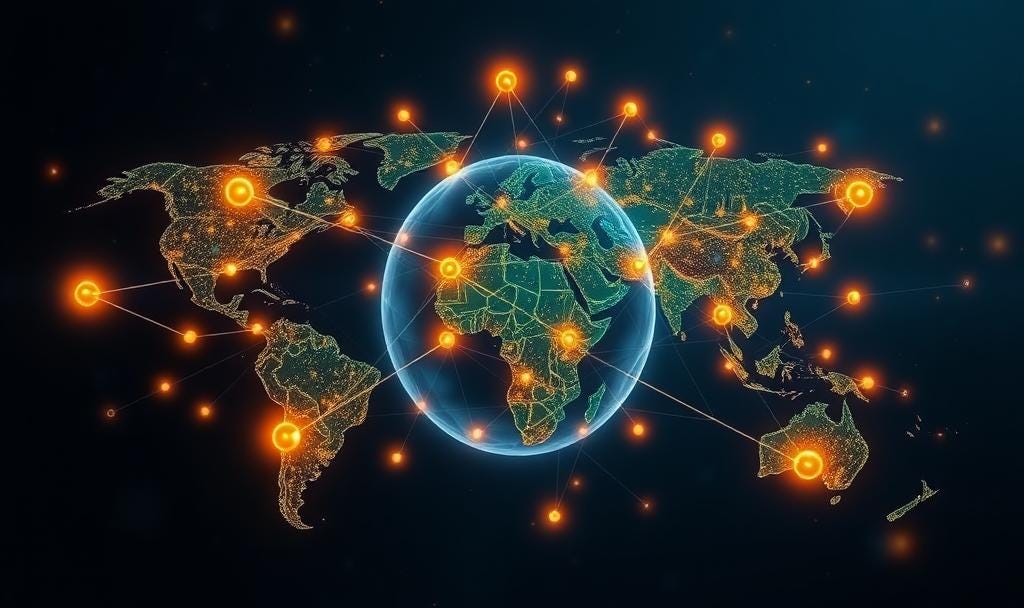
Decentralization offers a transformative blueprint for America, reimagining critical sectors: food production, education, healthcare, housing, disaster response, banking, and information sharing, through local empowerment and collective wisdom. By shifting authority to communities, we can create systems that are resilient, equitable, and attuned to the homeostasis essential for thriving societies. Drawing on Japan’s decentralized model, which balances local autonomy with shared purpose, the following solutions illustrate how America can rebuild each sector to prioritize people over profit and harmony over control.
Food Production & Distribution
In food production, industrial agriculture’s monopolies degrade soils and expose supply chains to shocks, as seen during pandemic-era shortages. Supporting small-scale, regenerative farms, which employ cover cropping and agroforestry to restore ecosystems, would rebuild resilience. Local grants, inspired by Japan’s JA Group, could fund these farms, while regional food hubs, like Vermont’s Intervale Center, would connect farmers to schools, hospitals, and markets. Such systems reduce environmental stressors, strengthen local economies, and foster a cultural bond with the land, positioning farmers as stewards of both food and environment. By aligning with ecological limits, decentralized food systems ensure sustainability, embodying the balance of wa.
Education
Education, stifled by federal mandates, fails to nurture creativity or local identity. Granting schools more autonomy would enable curricula tailored to regional contexts. A Navajo school in Arizona might emphasize indigenous history and environmental stewardship, while a Detroit school could focus on urban innovation and trades. Community-led programs, such as after-school workshops in carpentry, coding, or creative arts, would build practical skills and pride. California’s Farm to School initiative, which integrates local agriculture into learning, shows how decentralization fosters engagement. By cultivating curious, connected citizens rather than test-takers, such systems restore agency and collective well-being.
Healthcare
Healthcare, a corporate maze prioritizing profit, leaves millions underserved. Community health cooperatives, like Japan’s local clinics, would emphasize preventive care through nutrition, mental health support, and screenings. State-level universal plans, funded by redirected subsidies, could ensure access, while rural telemedicine hubs, as piloted in Alaska, would leverage AI diagnostics to serve remote areas. These cooperatives could address local challenges, rural opioid addiction, or urban stress, reducing costs through early intervention. By prioritizing holistic health, decentralized healthcare rebuilds trust and balance, aligning with Satoyama’s integration of human and environmental well-being.
Housing
Housing, treated as a commodity driven by profit motive, has become increasingly unaffordable to hard-working Americans due to rigid zoning and corporate developers, and requires local solutions. Municipal housing trusts, like those in Japan, could use local taxes to build homes suited to regional needs, such as co-housing in cities or multigenerational units in aging towns. Community land trusts, like Burlington, Vermont’s Champlain Housing Trust, ensure permanent affordability, curbing gentrification. Reforming zoning for mixed-use, high-density neighborhoods would reduce sprawl and foster walkable communities. Decentralized housing empowers localities to address homelessness and inequity, creating spaces where connection and dignity thrive.
Disaster Response
Disaster response, crippled by federal bottlenecks, as seen in FEMA’s 2024 failures in North Carolina, demands local agency. Municipal response teams, trained in Japan-style community drills, could deliver aid swiftly, leveraging local knowledge. Decentralized supply caches in every county would ensure immediate access to food, water, and medical supplies. AI-driven forecasting, tailored to regional risks like hurricanes or wildfires, could enhance preparedness, as California’s wildfire alerts demonstrate. The Amish and local volunteers in North Carolina glaringly outperformed centralized efforts, showing how communities can act with speed and compassion. Decentralized response saves lives and rebuilds trust in collective action.
Banking
Banking, dominated by centralized institutions, concentrates wealth and stifles local economies. Decentralized finance, inspired by blockchain-based platforms like Ethereum, Solana, and others, empowers communities through local credit unions and peer-to-peer lending. Community banks, modeled on Japan’s regional shinkin banks, would prioritize small businesses and affordable loans, reinvesting profits locally. For example, credit unions support local projects while remaining independent of Wall Street. Such systems democratize wealth, reduce reliance on volatile global markets, and foster economic resilience, ensuring communities control their financial futures in harmony with collective needs.
Information Sharing
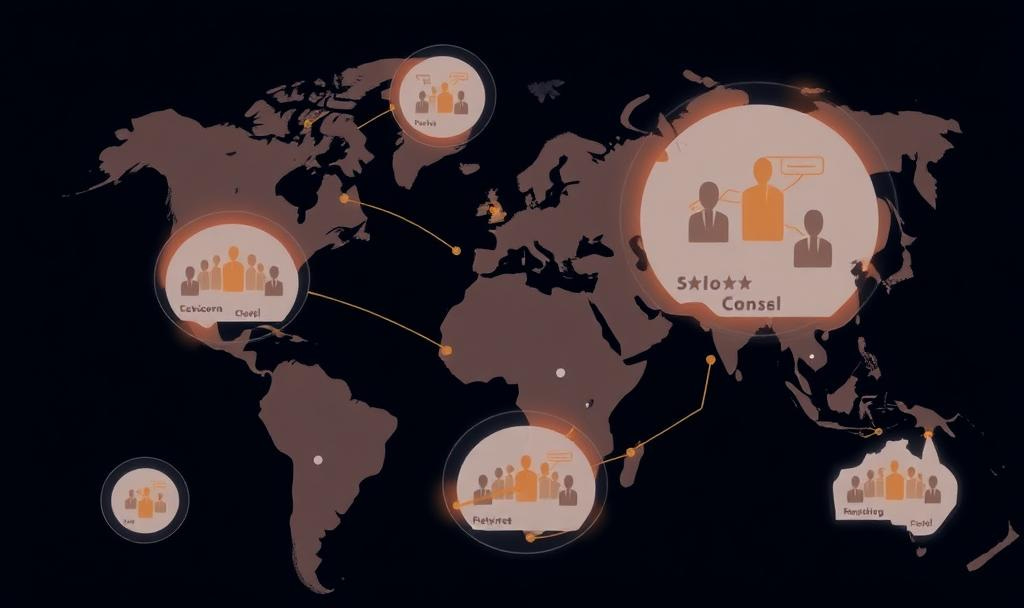
Information sharing, including news and scientific inquiry, suffers under centralized gatekeepers, corporate media, and captured institutions that prioritize agendas over truth. Decentralized platforms, like blockchain-based news networks or open-source data repositories, could restore integrity. Projects like IPFS (InterPlanetary File System) or Zer0 Tech’s Messenger and Worlds enable peer-to-peer content sharing, bypassing censored channels, while platforms like ResearchHub allow scientists to share data freely, unbeholden to politicized funding. Local news cooperatives, such as those emerging in Colorado, amplify community voices over corporate narratives. By empowering individuals to verify and share knowledge, decentralized information systems rebuild trust and foster independent inquiry, essential for a balanced, informed society.
These solutions share a common thread: they restore agency to communities, enabling rapid, equitable adaptation. Unlike centralized systems, which impose uniformity, decentralization sparks innovation and resilience, ensuring each sector contributes to homeostasis. By adapting from centralized to decentralized systems, and from shareholder to stakeholder paradigms, we can build new systems that honor individual needs and collective strength, creating a future where harmony prevails.
The Road to Resilience
Decentralization is not merely a policy shift; it is a reimagining of America’s social fabric, where communities reclaim their power to thrive. Unlike centralized models, which reduce people to components in a profit-driven machine, decentralized systems restore agency, fostering the delicate balance of homeostasis needed for flourishing societies. Central to this vision is the shift from shareholder to stakeholder paradigms. Shareholder models, entrenched in centralized systems, chase short-term profits for a select few, often exploiting workers, consumers, and ecosystems. Stakeholder paradigms, by contrast, prioritize the well-being of all participants, communities, employees, customers, and the environment, ensuring long-term sustainability and mutual benefit. This approach mirrors Japan’s wa, harmonizing individual needs with collective strength, and aligns with the people’s duty to create systems that protect our shared future.
The strength of decentralization lies in its resilience, equity, and humanity. Local solutions, from North Carolina’s volunteer-led disaster relief to Vermont’s community land trusts, adapt swiftly to crises, bypassing distant bureaucracies. Empowered communities address their own needs, reducing disparities and rebuilding trust. Smaller, decentralized systems align with ecological limits, preserving resources for generations to come. Critics warn of inconsistency or fragmentation, yet Japan demonstrates that national standards paired with local control create cohesion without rigidity. Others cite costs, but centralized inefficiencies, from FEMA’s failures to corporate bailouts, squander far more. The true barrier is political will, as entrenched interests cling to a status quo that serves shareholders over stakeholders.
Collective Future > Status Quo
This barrier is not insurmountable; it is a call to action. Grassroots movements, from local food co-ops to mutual aid networks, are already weaving a new tapestry of resilience. Pilot projects, like Colorado’s news cooperatives and Burlington’s housing trusts, illuminate the path forward.
Decentralized platforms, powered by Web 3.0 technologies like IPFS and Zero Tech’s Messenger and Worlds, empower individuals to share knowledge freely, unshackled from corporate gatekeepers. These efforts prove that the people, not distant institutions, hold the power to shape a future where harmony prevails.
Every American has a role in this transformation. Support local farmers at markets, advocate for school autonomy in your district, join a credit union, or amplify independent voices through decentralized platforms like Web 3.0 instead of Web 2.0’s controlled ecosystems.
These acts, small yet multiplied across communities, fulfill our duty to create systems that secure our collective future. Inspired by Japan’s wa and satoyama but rooted in America’s diverse spirit, we can forge a nation of thriving, interconnected communities. Together, we will build a future where every locality flourishes in balance, where stakeholders triumph over shareholders, and where our shared destiny is not just assured, but celebrated as a testament to We the People’s resolve.
Like my content?
Support my work with Ko-Fi
I’m really glad I found this. Real strength comes when power is close to the people and when communities can decide and adapt for themselves.