

We mustn’t be caught by surprise by our own advancing technology.”
~ Aldous Huxley, The Body as the Last Commons
Every great enclosure in human history has required first a philosophical justification, a story told about the nature of the thing being taken. The English commons were enclosed once Parliament had accepted the premise that land held collectively was land wasted, that productivity required private dominion. The enclosure of indigenous territories across the Americas proceeded from the doctrine that land uncultivated in the European sense belonged to no one. In each case, material dispossession followed a prior metaphysical one: redefine what the thing is, then proceed to take it.
We are living through the most intimate enclosure in the history of civilization. Its target is the human body itself.
The body is the primary locus of sovereignty, the threshold between self and world, the vessel through which consciousness encounters existence. Every sacred tradition that has taken the full measure of human experience has understood this. The Hermetic axiom as above, so below locates the body within a nested correspondence of cosmic intelligences. The Vedantic traditions speak of the koshas, the layered sheaths of the embodied self, each more subtle than the last. The esoteric streams running beneath Western civilization, Neoplatonic, Kabbalistic, Rosicrucian, have insisted with one voice that matter is spirit’s chosen instrument of manifestation, the consecrated vehicle of its earthly work.
To surveil the body without consent, to alter its electromagnetic environment, to introduce devices into its tissues and fluids beyond the knowledge and agreement of the person inhabiting it, is a desecration. The word is chosen deliberately. It names what happens when something sacred is treated as merely functional, when the vessel of consciousness is reduced to a data-generating substrate available for external modification and monitoring.
This is the ontological crisis that biodigital convergence presents. The technology itself, governed by genuine ethics and genuine consent, carries real potential for human flourishing. The crisis lives upstream of the technology, in the foundational assumptions about what a human being is, and therefore what may be done to one.
The Architecture of the Enclosure
What is being built, taken as a whole, is a continuous sensing and transmission layer wrapped around and increasingly within the human body. Its components carry the antiseptic vocabulary of engineering: The Internet of Things (IoT), Internet of Bodies (IoB), Internet of Nano-Things (IoNT), Internet of Bio-Nano-Things (IoBNT), Wireless Body Area Networks (WBAN), and graphene antennae operating in the terahertz spectrum. Each represents a stratum of the same converging architecture, devices on the skin, devices implanted, devices circulating in the bloodstream, all transmitting biological data outward to networks whose governance, ownership, and ultimate purpose remain largely unaccountable to the people whose bodies generate that data.
The scaling of this architecture deserves pause. The Internet of Things connected household devices to external networks, a development whose surveillance implications most people have only partially reckoned with. The Internet of Bodies extends that same connectivity to pacemakers, insulin pumps, neural interfaces, and prosthetics, devices whose compromise carries consequences measured in human lives rather than household convenience. The Internet of Bio-Nano Things moves the interface inward to the cellular and molecular level, where nano-sensors smaller than a dust mite can monitor glucose, map proteins, track microbial DNA, and transmit that data wirelessly through the body’s own tissues. Graphene antennae, a single carbon layer thick, make this transmission possible across the terahertz spectrum, invisible, pervasive, and operating largely beyond the reach of current regulatory frameworks.
“The greatest threat to our freedom is not the technology itself,
But the secrecy with which it is deployed.”
Columbia University’s School of Engineering demonstrated injectable chips communicable via ultrasound, visible only under a microscope. DARPA’s Smart Dust program established the conceptual and technical foundations for autonomous sensing at the nanoscale more than two decades ago. These are documented developments in the published scientific literature, proceeding through peer-reviewed channels, funded by institutional sources whose investment requires eventual deployment at scale.

The reasonable question is the one most rarely asked in polite technical discourse: deployment toward what end, governed by whom, accountable to what standard of human dignity?
The answer, at present, is that no comprehensive framework exists. The FDA oversees classified medical devices. IEEE technical standards address interoperability and signal security. The EU’s GDPR addresses data consent in the abstract. None of these frameworks adequately addresses the condition in which devices enter the body through means other than explicit medical procedure, through aerosols, through water systems, through food supply chains, through injections whose full material contents remain incompletely disclosed. The regulatory architecture was designed for a world in which the body’s boundary was assumed. That assumption requires urgent reexamination.
What follows is an examination of these technologies as a unified system, their philosophical and spiritual implications, and the ontological questions that arise when the boundary of the body itself becomes contested territory.
Note: Key terms are defined in the glossary, and a chart is provided at the bottom of this article that maps their connections.
As philosopher Nick Bostrom asks, “When we merge with machines, we must ask: who controls the interface?”1 These technologies promise to transform healthcare, yet their ability to enter our bodies without consent, through injections2, aerosols, food, or water, threatens autonomy, the sanctity of life, and humanity’s future.3
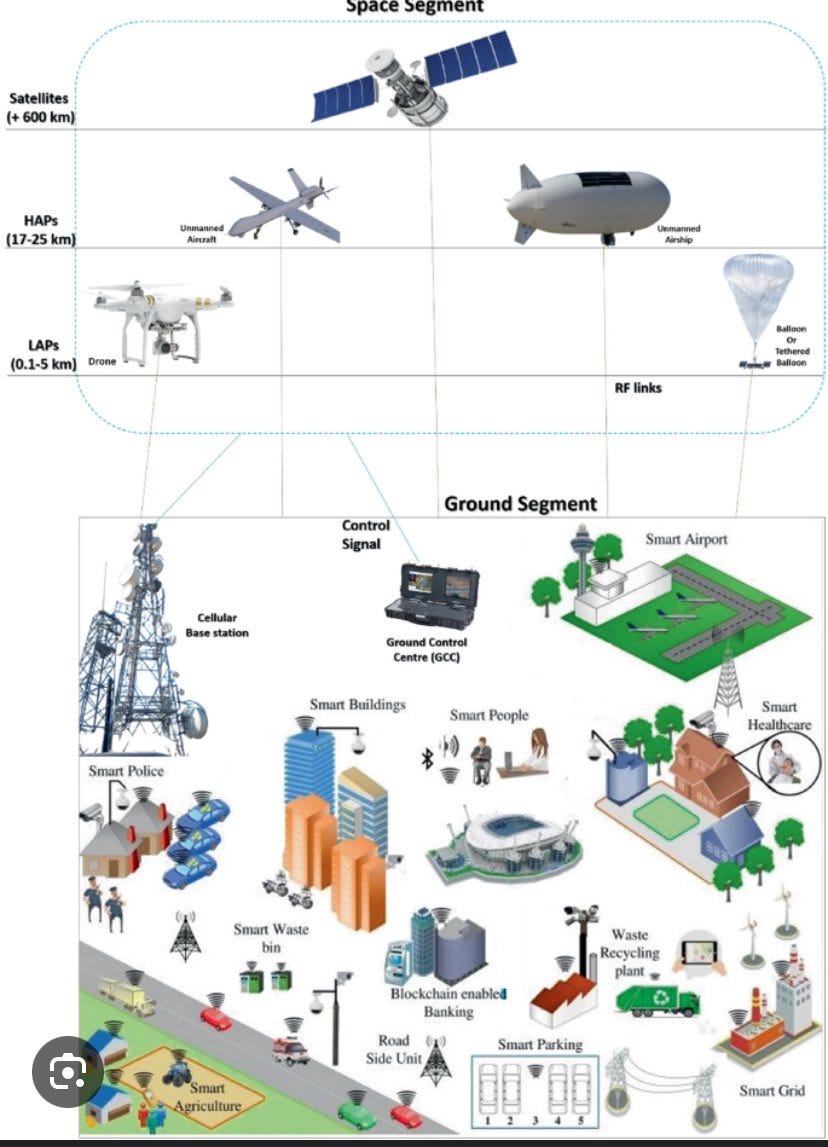
The Internet of Things: A Double-Edged Sword
The Internet of Things (IoT) links devices like smartwatches and thermostats to the internet, enabling automation. A fitness tracker can improve health, while IoT optimizes city infrastructure.4 Yet, constant data collection risks privacy breaches, and weak security invites hacking, exposing personal lives.5 IoT’s convenience is undeniable, but without safeguards, it becomes a surveillance tool, potentially weaponizing our data against us - especially when the wrong people are wielding such technology under social constructs that favor authoritarianism.
The Internet of Bodies: Promise and Peril
The concern is shared even from within the field. Dr. Mehmet Yildiz, a longtime IoT practitioner and technology advocate, writing in his piece, “The Internet of Bodies (IoB) - Who Wants Their Body on the Internet” arrives at his assessment without ideological animus toward these systems. His conclusion nonetheless carries weight:
“The current situation is entirely unregulated. Therefore, this lack of regulation poses severe risks for extremely sensitive data. Moreover, it is not only a risk at an individual level but also at the national level.” ~ Dr. Mehmet Yildiz
When those closest to the architecture of a technology identify its governance vacuum as the primary threat, the philosophical question that follows is not technical in nature. It asks what vision of the human person made that vacuum acceptable, what assumptions about the body and its sovereignty permitted an entire convergence infrastructure to develop faster than any ethical framework could track it.
Scaling Down: The Internet of Nano-Things
The scaling of this architecture reaches its most intimate threshold at the nanoscale. The Internet of Nano-Things (IoNT) include tiny graphene sensors, smaller than a grain of sand. In 2021, Columbia University's School of Engineering demonstrated a single-chip system in an article, entitled, “Tiny, wireless, injectable chips use ultrasound to monitor body processes,” published by ScienceDaily. The Columbia University School of Engineering and Applied Science built the “World’s smallest single-chip system”… as small as a dust mite and only visible under a microscope and that they could communicate with it wirelessly using ultrasound. These types of “smart dust” particles can detect cancer biomarkers or pollutants with precision.6 The toxicological picture accompanying this precision remains incomplete. Research establishing that nanomaterials pose genuine physiological risks predates the current deployment conversation by two decades,7 raising the threshold question of what it means to introduce into the body's cellular environment substances whose long-term effects remain incompletely characterized. As part of biodigital convergence, IoNT devices can enter the body's environment without detection or disclosure, amplifying the need for transparency to protect our right to know.

Merging Tech and Biology: The Internet of Bio-Nano-Things
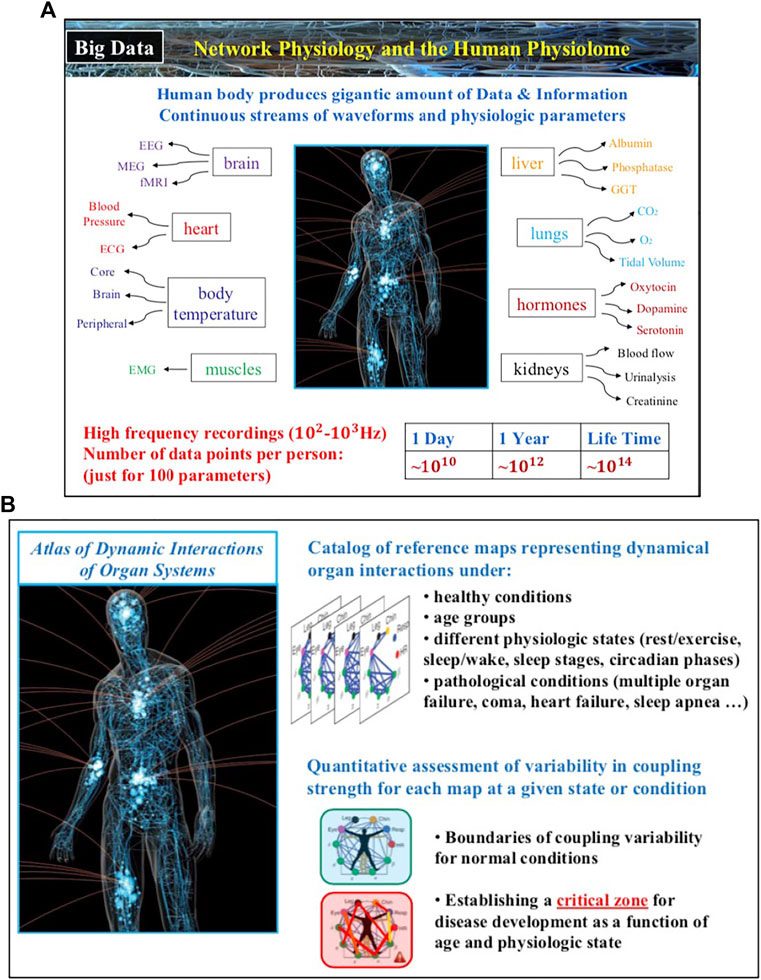
The Internet of Bio-Nano-Things (IoBNT) represents biodigital convergence at its most intimate, where nanodevices merge directly with living cells. A bloodstream sensor of this order can monitor glucose, deliver targeted therapeutics, or track omics data encompassing proteomics, the protein architecture of the cell, and metagenomics, the microbial DNA communities that constitute a significant dimension of human biological identity.8 Digital twins, virtual models of biological systems built from continuous IoBNT data streams, extend this capacity further, creating predictive models of individual physiology whose implications for both medicine and surveillance remain largely unexamined.
The cyber vulnerability of such systems deserves particular attention. Data theft, device tampering, and the physiological effects of sustained radiation exposure from network interfaces represent documented risk categories whose long-term consequences remain uncharacterized.9 The delivery of such devices through aerosols, water systems, or food supply chains, outside any framework of disclosure or agreement, places the question of bodily sovereignty at the center of what must become an urgent civilizational conversation. The measure of this convergence is simple: whether it enhances life or exploits it.

Wireless Body Area Networks: A Hidden History
Wireless Body Area Networks (WBAN) link wearable or implanted devices to monitor vital signs, enabling telemedicine since research began in the early 2000s and standards emerged in 2012.10 Privacy vulnerability and signal interception represent the documented technical risks of such networks.11 The duration of this development carries its own implication: that nanosensors, sometimes called "nano dust" or "smart dust,"12 may have entered the body's environment through non-invasive means across years of deployment whose scope remains undisclosed to most people carrying it.13
Who monitors our biology without our knowledge? What artificial intelligence is presently mapping our neural activity? What fail-safes, if any, govern the systems operating within the body's own electromagnetic environment? These are questions the present moment requires answers to, and the absence of those answers is itself a form of answer.

Graphene Antennae and Terahertz: The Invisible Backbone
Graphene antennae, crafted from a single carbon layer, form the transmission infrastructure for IoNT, IoBNT, IoB, and WBAN alike.14 Operating across the terahertz spectrum and supporting 5G, 6G, and 7G networks, they are invisible to the naked eye and largely invisible to public discourse. The health effects of sustained terahertz radiation exposure remain understudied in proportion to the pace of deployment, and the interception vulnerability of these networks adds a security dimension to what is already a profound sovereignty question. Invisibility, in both the physical and political sense, is the condition that makes accountability most urgent and most difficult.
“The only thing necessary for the triumph of evil is for good men to do nothing,”
Edmund Burke.
Ethical, Legal, and Philosophical Implications
The non-consensual dispersal of nanotechnology into the body's environment is a moral condition before it is a technical one. Joshua Stylman's framework, developed in his Brownstone Institute piece “Node Without Consent” and extended in The Invisible Leash: How Tech Giants are Perfecting the Hidden Architecture of Subjugation, names what is at stake: deploying devices within the body without knowledge or agreement redefines the human person at the most fundamental level, from sovereign agent to network node. The architecture of subjugation Stylman describes is invisible by design, woven into the electromagnetic environment of daily life, and its invisibility is the source of its power.

The philosophical traditions that have most rigorously examined the nature of human consciousness have understood the body as the instrument through which sovereign awareness encounters the world. The Hermetic, Kabbalistic, and Vedantic streams all converge on this recognition: that the embodied self is not an accident of biology but a consecrated vessel, the meeting point of spirit and matter. To introduce into that vessel devices whose function, governance, and ultimate purpose remain undisclosed is to violate something that law has not yet found adequate language for, because the violation is ontological before it is legal.
This is what the scientific materialist paradigm cannot perceive in its own blind spot. Having reduced the body to a biological information system, it finds nothing categorically wrong with adding more information systems to it. The sacred has been evacuated from its account of matter, and so desecration does not register as a meaningful category. Sovereign Sapien enters this conversation from a different ontological ground entirely, one in which the body’s sanctity is the premise rather than the conclusion, and consent is therefore the absolute threshold of any legitimate technology.
The Hubris of Scientism and the Deontological Imperative
Deontological ethics grounds its authority in the recognition that persons are ends in themselves, never instruments of another's agenda. The unilateral deployment of technologies into the body's environment by governments or expert classes, however benevolent the stated rationale, reflects the hubris of scientism, the presumption that technical knowledge confers moral authority, that the ability to do a thing constitutes permission to do it. This presumption has historically required correction at great cost.
Neural nano networks and graphene mesh interfaces carry genuine therapeutic promise for neurological conditions.15 That promise is real and worth pursuing under conditions of full transparency and genuine consent. The same architecture, however, is capable of behavioral modification, of monitoring and influencing the thought patterns of the person carrying it. Here the stakes of the governance question become fully visible.
Consider what would have been possible had such technologies existed in previous centuries. Plato, whose philosophical vision of justice and the good society shaped the entire Western intellectual tradition. Galileo, whose insistence on observable reality over institutional authority cost him his freedom. Gandhi, whose embodied practice of nonviolent resistance dismantled an empire. Martin Luther King Jr., whose moral vision reoriented a nation's conscience. Each of these figures was considered dangerous by the power structures of their time. Each depended on the inviolability of their own consciousness to carry their vision forward. Neural surveillance and behavioral modification architecture in the hands of those same power structures would have constituted not merely an injustice to those individuals, but an incalculable loss to the whole of human civilization.
This is the civilizational stakes of the consent question. The suppression of the free thinker is always the suppression of humanity's next evolutionary threshold. Technologies capable of monitoring and modifying consciousness are therefore not merely personal sovereignty issues. They are questions about what kind of species we intend to remain.
The Legal Vacuum and Its Consequences
The regulatory architecture surrounding these technologies reflects the same foundational assumption that drives their development: that the body's boundary is not a threshold requiring active protection. The FDA oversees classified medical devices but dispersal mechanisms fall outside its jurisdiction, with post-marketing surveillance serving as the primary safety framework.16 IEEE standards, like 802.15.6 for WBAN and 1906.1 for nanoscale communication, address technical interoperability and signal security without mandating consent or engaging the question of sovereignty.17 The EU's GDPR addresses data consent in the abstract while leaving bodily integration entirely unaddressed.18 Standards for digital twins reveal documented socio-ethical risks, without corresponding ethical enforcement frameworks. Th IEEE Code of Ethics exists as a statement of principle without an enforcement apparatus capable of giving it teeth, domestically or globally.
In May 2021, the UK Ministry of Defence's Development, Concepts and Doctrine Centre, publishing jointly with Germany's Bundeswehr Office for Defence Planning, produced Human Augmentation: The Dawn of a New Paradigm, a strategic implications document whose Feasibility Assessment section states plainly: "We cannot wait for the ethics of human augmentation to be decided for us." The document proceeds to identify vaccination processes and gene and cell therapies as examples of human augmentation already in the pipeline, and raises the possibility of a moral obligation to augment people where it promotes well-being or protects against novel threats.
Institutional disclosure of this order warrants the full weight of public attention. The ethical frameworks that might govern these decisions were explicitly subordinated to the timeline of deployment, by the defense ministries of two NATO allies, in a published document, four years ago.
The institutional appetite extends well beyond European defense ministries. DARPA's Next-Generation Nonsurgical Neurotechnology program carries a budget of at least $125 million, with the stated goal of developing high-performance, bidirectional brain-machine interfaces for able-bodied service members, capable of reading from and writing to neural tissue without surgical implantation. The program explicitly explores technologies that may be swallowed, sniffed, injected, or absorbed into the human body as delivery mechanisms.19 The military application is unambiguous; the civilian implications of technologies developed under those parameters demand equal scrutiny.
The World Economic Forum has been equally candid about its vision. A 2020 WEF report produced in collaboration with McGill University described the Internet of Bodies as already present, with sensors attached to, implanted within, or ingested into human bodies to analyze and modify behaviors.20 A 2022 WEF Agenda post stated plainly that technology will become more intertwined with the body in the form of implants, and that such integration forms part of a natural evolution.21 The normalization of language is itself a governance strategy, a way of making the unconsidered seem inevitable.
The Government of Canada's own strategic foresight body, Policy Horizons Canada, was equally forthcoming in its February 2020 publication, Exploring Biodigital Convergence: What Happens When Biology and Digital Technology Merge.22 The document acknowledges that convergence opens entirely new ways to "monitor, alter and manipulate human thoughts and behaviours," and that the human body has become "a connected data platform." Among its planning scenarios, the document includes what it calls a "Neurotech Nightmare," in which corporations sell access to citizens' minds through loyalty programs coupled with neurotechnologies, described not as a cautionary dystopia but as a governance planning scenario requiring policy attention. The foreword states plainly that this convergence "may transform the way we understand ourselves and cause us to redefine what we consider human or natural."
When governments publish documents acknowledging that the technologies they are planning for include the alteration of human thought and the redefinition of what it means to be human, the burden falls on those same governments to answer, publicly and with binding force, where the limits of that redefinition lie.
What is required is a legal framework commensurate with the actual stakes. America in particular needs robust legislation protecting individual, state, and national sovereignty against unconsented biodigital integration, preventing foreign entities, whether in Europe or China, from deploying convergence technologies through shared 5G, 6G, 7G and beyond networks without consent. Mandatory opt-in frameworks, import screening for nanotechnology entering food and water supplies, and enforceable international treaties are the minimum threshold of a governance architecture adequate to this moment. The vacuum that currently exists is a choice, and it is a choice with consequences measured in human sovereignty.
The Philosophical Stakes of Convergence
Biodigital convergence does not merely challenge our understanding of human nature. It forces a confrontation with the foundational question every civilization must eventually answer: what is a human being, at the most essential level, and what therefore may not be done to one without consent?
If nanodevices circulating within the body’s tissues can monitor, influence, or alter thought and behavior, the question of freedom becomes biological before it is political. Political freedom presupposes an interior life that remains one’s own, a locus of perception and judgment that external forces may pressure but cannot directly rewrite. The architecture of biodigital convergence, at its furthest extension, places that presupposition in question.
Author of the book “Homo Deus: A History of Tomorrow”, Yuval Noah Harari has argued that humans are now “hackable” animals, that the combination of biological knowledge and computational power makes the inner life as accessible to external manipulation as any other data system. The warning is real and the danger he identifies is genuine. What his framing cannot accommodate, proceeding as it does from within the materialist paradigm, is the counter-recognition that consciousness is not reducible to its biological substrate. The traditions that have mapped human interiority, (ie: Hermetic, Kabbalistic, Vedantic), contemplative in every culture, converge on the understanding that awareness itself is not a product of neural firing but its witness. From a spiritual perspective, the body is the instrument and the player is not the instrument.
This distinction carries practical consequences. A civilization that understands the body as sacred vessel rather than biological machine will govern the technologies that enter it accordingly. The transhumanist vision of enhancement through convergence is not inherently dystopian, the fusion of biology and technology under conditions of genuine consent and genuine wisdom could extend human flourishing in ways presently unimaginable.23 The question is always who controls the terms of that fusion, toward what vision of the human person, and by whose authority.
The answer to that question determines whether biodigital convergence becomes one of humanity’s greatest gifts or its most intimate betrayal.
Mitigating Risks and Opting Out
The Path of Reclamation
A reasonable response to the evidence presented here is frustration rather than optimism: if nanosensors have been entering the body's environment for decades through means that bypass disclosure, if defense ministries have explicitly subordinated ethics to deployment timelines, if governments are planning for the redefinition of what it means to be human, what precisely does a call for regulation accomplish?
The answer is that it accomplishes the difference between a harm that compounds indefinitely and one that is named, contested, and ultimately bounded. Regulatory frameworks arrive late in every domain where technological deployment outpaces governance. Their lateness does not make them irrelevant. The question of what kind of civilizational relationship with these technologies humanity chooses to establish is still genuinely open, and the choice made in this generation will determine the conditions of every generation that follows.
Sovereignty reclaimed begins with visibility. The first obligation of any civilization that takes the sanctity of embodied life seriously is to make the invisible visible: to mandate full disclosure of nanotechnology in food, water, air, and injectable substances, and to establish genuine public consultation as a prerequisite of deployment decisions. Transparency is the precondition of consent, and consent is the absolute threshold of legitimate technology.
Detection tools capable of identifying nanosensors in the body's environment must become as accessible as any other instrument of personal health. The individual's ability to know what is present within their own biological field is a natural extension of the right to bodily sovereignty, a right that predates any legal framework and requires none for its legitimacy.
Neutralization options, filters, deactivation methods, and electromagnetic shielding belong in the same category: practical instruments of a sovereignty that refuses to remain abstract. The right to opt out of biodigital integration must be legally enshrined and technically supported, with a clear distinction preserved between those who choose convergence and those who choose to remain outside it. Both choices deserve equal protection under law.
Legal frameworks adequate to this moment require mandatory opt-in consent for any biodigital technology, enforceable import screening, and international treaties governing convergence deployment across shared network infrastructures. Collective legal recourse must remain available to those whose bodily sovereignty has already been violated, with explicit protections against legislative immunity that would deny due process to American citizens.
Public literacy in bioethics and digital sovereignty is as urgent as any other form of civic education. Most people inhabiting this technological moment have no framework for understanding where the architecture of convergence currently stands or where its trajectory leads. Addressing that absence is an act of civilizational responsibility, and it begins with conversations exactly like this one.
The question of artificial intelligence within this architecture deserves particular attention. What fail-safes govern AI systems operating within the biodigital grid? What protocols exist to identify and interrupt unconsented neural monitoring or behavioral modification? These are questions that demand answers from the engineers, institutions, and governments building these systems, and the silence that currently greets them is its own form of disclosure.
The framework for what adequate governance would look like already exists in draft form. A Digital and Biodigital Bill of Rights, developed under the Sovereign Sapien platform and posted for public engagement at the Policies for People forum24, enumerates ten foundational rights including bodily sovereignty, informed consent without coercion, the right to know what enters the body, full liability restoration for manufacturers, biological privacy, opt-out rights without penalty, transparent governance free from regulatory capture, protection of unmodified biological identity, freedom from biodigital surveillance, and recourse against the state where institutional complicity has foreclosed domestic remedy. The document is a living proposal, offered for substantive engagement and coalition building. Rights named are rights that can be organized around.
The Living Threshold
Biodigital convergence is arriving whether humanity deliberates about it or not. The architecture is being built, the standards are being written, the deployment is underway. The question that remains genuinely open is the terms on which humanity meets this threshold.
Those terms are determined by what we believe a human being is. A civilization that holds the body sacred, that understands consciousness as something more than its neural substrate, that recognizes sovereignty as a spiritual condition before it is a legal one, will demand different terms than one that has accepted the materialist reduction of the person to a data-generating biological system. Sovereign Sapien exists precisely to articulate and defend those different terms, to insist that the perennial wisdom traditions which have understood the nature of embodied consciousness for millennia carry something irreplaceable into a conversation that technocracy has attempted to conduct without them.
The path forward belongs to those who choose informed partnership over unwitting participation, who organize around the principles of transparency, consent, and the inviolability of the body’s sovereign boundary, and who refuse the normalization of the unconsidered.
The technology need not be refused. It must be governed, by values older and deeper than the systems that currently deploy it.
To honor the sanctity of life, we must consider what we can do now to protect ourselves and our collective future. We must ensure transparency and allow humans to have opt-out rights between natural-born and those who want to be transhuman cyborg entities. Without social agreements rooted in ethical frameworks like deontology, recognizing natural-born beings as autonomous agents with inherent dignity, we are on a path of potentially disastrous consequences.
The ability to opt out should be non-negotiable. Yet, if IoBNT or IoB devices can be, or have already been, dispersed without our consent, individuals have already lost sovereignty over their bodies. This action violates our right to self-determination, a universal human need.
Thus, we need to focus on key areas:
Transparency, Accountability, and Regulation: Mandate labeling for nanotechnology and public consultations. Strengthen U.S. laws to require consent, screen imports, and deter covert deployment by governments or corporations, ensuring sovereignty.
Detection Tools: Personal scanners to identify nanosensors in air, food, or our bodies, empowering choice.
Neutralization Options: Filters or deactivation methods to disable unwanted devices, ensuring bodily autonomy.
Public Education: Promote education on bioethics and digital literacy to empower individuals to question and understand emerging technologies. Use accessible campaigns to demystify these technologies.
Legal Protections: Laws mandating opt-out mechanisms, with enforcement to deter covert deployment. If evidence of non-consensual biomonitoring emerges, collective legal action could hold corporations or governments accountable, as seen in past cases of medical malpractice, but we would need to ensure legislatures do not provide blanket immunity or legal frameworks that deny due process to American citizens.
AI Protections: What fail-safes are in place to ensure the programs in AI systems honor fundamental protocols? Have they embedded fail-safes in the biodigital grid? Are they monitoring unconsented devices or neural manipulation and triggering shutdowns to identify and neutralize psychopathic behaviors to prevent dystopian control?
Without these, the sanctity of life is undermined, as individuals become extensions of a network that can be modified and manipulated, rather than existing as free, autonomous beings.
Truth-seeking reasoning supports the view that humanity flourishes when choice is preserved. Individuals can demand transparency, use privacy-focused devices, and advocate for “right to know” laws. Collective action, petitions, and forums can safeguard humanity’s potential, but most are wholly ignorant of where we are in the present moment and where we are heading.
Individuals can take steps by demanding transparency from governments and corporations, using privacy-focused wearables, and advocating for “right to know” legislation. Collective action, like petitions or public forums, can amplify these demands.
Where Do We Go From Here?
These technologies herald connectivity and health but threaten autonomy if deployed in secret. Biodigital convergence could heal or enslave. Transparency, consent, and opt-out rights honor the sanctity of life, protecting evolution from manipulation. AI must safeguard our grid, ensuring technology serves global harmony, not authoritarian control.
We can embrace these advancements while preserving free will, demanding a future where every naturally born being chooses their path.
Let’s envision a future where we are informed partners, not unwitting nodes, in this connected world.
“The price of freedom is eternal vigilance.”
~ Aldous Huxley, Brave New World Revisited

Like my content?
Support my work with Ko-Fi
Articles & Books for further reading:
Exploring Biodigital Convergence - The Government of Canada
Horizons of Biodigital Convergence: Law, Policy, and Ethical Standards $65
Glossary of Emerging IoT and Biodigital Convergence Technologies
Biodigital convergence refers to the integration of biological systems with digital technologies (e.g., IoT, AI, nanotechnology) to monitor, analyze, and manipulate biological processes in real time. This is central to fields like IoBNT, IoMT, and omics, where IoT devices (e.g., nanosensors, wearables) collect biological data for health, environmental, or industrial applications. The following list, in Alphabetical Order, examines the Acronyms and what they are and/or do:
AIoT - Artificial Intelligence of Things: Integrates AI with IoT for intelligent data analysis and automation, enabling predictive analytics in smart cities or healthcare. Enhances IoIT and biodigital applications (see IoIT, IoBNT).
BAN - Body Area Network: Network of devices on or in a person’s body for health data collection, often used in medical IoT for real-time monitoring. A subset of WBAN that supports IoMT and IoBNT.
BAN Nodes - Body Area Network Nodes: Individual devices (e.g., sensors, actuators) within a BAN, communicating wirelessly to monitor physiological data. Critical for real-time health tracking in IoMT and IoBNT (see BAN, WBAN).
Biofield: The electromagnetic or subtle energy field surrounding living organisms, potentially monitored via IoT sensors for health diagnostics. Emerging in biodigital health, links to IoMT, biosensors.
Biohacking: Unauthorized modification of biological systems using IoT devices, a risk of unconsented IoBNT deployment. Raising ethical and security concerns.
Bioinformatics: Uses computational tools to analyze biological data (e.g., omics data), integrated with IoT for real-time processing in health or environmental contexts. Supports omics and biodigital convergence.
Bionanotechnology: Combines nanotechnology and biology to create devices (e.g., nanosensors) for monitoring biological processes, integral to IoBNT and omics. Enables IoBNT and biodigital health applications.
Biophotonics: Uses light-based technologies (e.g., lasers, photon sensors) to study biological systems, integrated with IoT for non-invasive diagnostics. Supports IoBNT, IoMT, and VLC applications.
Biosensors: Devices detecting biological signals (e.g., glucose levels, heart rate), often embedded in wearables or implants for real-time IoT health monitoring. Core to IoMT, IoBNT, and omics (see BAN, WBAN).
BLE - Bluetooth Low Energy: Power-efficient Bluetooth for short-range IoT communication, used in wearables and smart home devices. Enables low-power IoT connectivity (see PAN, Zigbee).
Brain-Computer Interfaces (BCIs): Systems enabling direct communication between the brain and external IoT devices, used for neurocontrol or health monitoring. Central to IoB and biodigital convergence (see IoBNT, IoMT).
CEN-CENELEC: European standardization bodies developing IoT and biodigital standards for interoperability and safety, critical for emerging tech adoption. Shapes IoT and biodigital convergence standards (see WG3–WG6).
CIE - Computational Intelligence Engine: AI-driven systems processing complex IoT data, used in predictive analytics for biodigital applications like health monitoring. Supports IoBNT and omics data analysis (see AIoT, IoBNT).
CoAP - Constrained Application Protocol: Lightweight web protocol for resource-constrained IoT devices, enabling efficient communication in low-power networks. Key protocol for IoT and IoNT (see LwM2M).
CPS - Cyber-Physical Systems: Integrates computation, networking, and physical processes, underpinning IoT applications like smart grids or autonomous vehicles. Foundational for IIoT and biodigital systems (see DTw).
Cyberphysical Backbone: Infrastructure integrating physical and digital systems for seamless IoT connectivity, enabling scalable biodigital networks. Supports IoT, IIoT, and IoBNT (see CPS, SDN).
DTw - Digital Twin: Virtual models of physical IoT devices or systems (e.g., human digital twins) for real-time monitoring and optimization in healthcare or industry. Central to biodigital convergence, integrates with IoMT, IoBNT.
Epigenomics: Studies epigenetic modifications (e.g., DNA methylation) affecting gene expression. IoT-enabled nanosensors (IoBNT) monitor epigenomic data for health insights. Key in biodigital convergence, links to IoBNT, IoMT.
Exposomics: Analyzes cumulative environmental exposures (e.g., pollutants) and their biological effects. IoT devices (e.g., wearables) collect exposome data for real-time health monitoring. Supports biodigital health applications (see IoMT, IoBNT).
FGOOC - Focus Group on Operational and Organizational Conformance: Likely a standards group for IoT and biodigital operational frameworks, ensuring system reliability (details limited). Supports IoT and biodigital standardization (see CEN-CENELEC).
Glycomics: Studies carbohydrates and their roles in biological systems. IoT-enabled sensors monitor glycomic data for health diagnostics. Emerging omics field, links to IoBNT, IoMT.
GMO - Genetically Modified Organism: Organisms with altered DNA, used in cellular agriculture or biosensing, monitored via IoT for precision applications.
Relevance: Part of biodigital convergence, links to IoBNT, M-CELS.
ICT - Information and Communication Technology: Encompasses technologies for information processing and communication, forming the backbone of IoT and biodigital ecosystems. Overarching field for IoT, IoNT, and related tech.
IIC - Industrial Internet Consortium: Promotes IIoT adoption through standards and frameworks for industrial IoT applications. Drives IIoT standardization (see IIoT, WG3–WG6).
IIoT - Industrial Internet of Things: IoT in industrial settings to optimize manufacturing, supply chains, and efficiency (Industry 4.0). Applies IoT to industrial biodigital systems (see CPS, DTw).
Ingestible Digital Pills: Smart pills with embedded IoT sensors to monitor internal health metrics or drug delivery, transmitting data wirelessly. Core to IoBNT and IoMT (see biosensors, WBAN).
IoB - Internet of Behaviors: Analyzes IoT data to understand and influence human behavior, used in healthcare, marketing, and smart cities. Emerging application of IoT data, links to IoMT, AIoT.
IoBNT - Internet of Bio-Nano Things: Integrates biological and nanoscale systems for molecular-level monitoring (e.g., in-body diagnostics), a core biodigital technology. Subset of IoNT, critical for omics and IoMT.
IoE - Internet of Everything: Extends IoT to include people, processes, data, and devices, creating a holistic interconnected ecosystem. A broader vision of IoT that supports biodigital integration.
IoIT - Internet of Intelligent Things: IoT enhanced with AI for autonomous decision-making (e.g., smart cities, autonomous vehicles). Overlaps with AIoT, supports biodigital analytics.
IoMT - Internet of Medical Things: IoT devices for healthcare (e.g., smart pacemakers, remote monitors), central to biodigital health applications. Links to WBAN, IoBNT, and omics fields.
IoNT - Internet of Nano Things: Nanoscale devices (e.g., nanosensors) communicating wirelessly for health or environmental monitoring.
Relevance: Foundation for IoBNT and biodigital convergence.
IoT - Internet of Things: Network of interconnected devices collecting and exchanging data for automation (e.g., smart homes, wearables). Core technology enables all subdomains and biodigital applications.
LoRa - Long Range: Low-power, long-range wireless technology for IoT (e.g., smart agriculture, environmental monitoring). Supports IoT and biodigital sensor networks (see LPWAN).
LPWAN - Low-Power Wide-Area Network: Long-range, low-power networks for IoT devices (e.g., smart meters, agricultural sensors). Enables IoT and IoNT connectivity (see LoRa, Sigfox).
LwM2M - Lightweight Machine-to-Machine: Protocol for managing resource-constrained IoT devices, built on CoAP for efficient communication. Supports IoT and IoNT device management (see CoAP).
M2M - Machine to Machine: Direct device communication without human intervention, foundational to IoT. Underpins IoT and IIoT connectivity.
M-CELS - Micro-Physiological Systems Enabled by Cellular Engineering and Life Sciences: Microscale systems mimicking human physiology (e.g., organ-on-chip) for drug testing or health monitoring, integrated with IoT for real-time data. Core biodigital technology links to IoBNT, omics.
MEMS - Micro-Electro-Mechanical Systems: Microscale devices combining mechanical and electrical components, used in IoT sensors (e.g., motion sensors). Enables IoNT and IoBNT sensors.
Metabolomics: Studies small-molecule metabolites in biological systems. IoT devices (e.g., wearables, IoBNT) monitor metabolic profiles for personalized medicine. Key in biodigital convergence, links to IoMT, IoBNT.
Metagenomics: Analyzes genetic material from microbial communities. IoT systems track metagenomic data for gut health or environmental monitoring. Supports biodigital health and environmental applications.
Microbiomics: Studies microbial communities (e.g., gut microbiota). IoT sensors enable continuous monitoring for health or environmental applications. Integral to biodigital convergence, links to IoMT.
MQTT - Message Queuing Telemetry Transport: Lightweight protocol for efficient IoT data exchange in low-bandwidth environments. Supports IoT and IoNT communication.
Nanomedicine: Uses nanotechnology for medical applications, like targeted drug delivery, enabled by IoBNT and IoMT. Supports biodigital health innovations.
Nanotheranostics: Combines nanotechnology-based diagnostics and therapeutics, enabled by IoBNT for personalized medicine. Supports IoMT and biodigital convergence (see nanomedicine, IoBNT).
NB-IoT - Narrowband Internet of Things: Cellular technology for low-power, long-range IoT communication, ideal for biodigital sensors. Supports IoT and IoBNT networks (see 3GPP).
NFC - Near Field Communication: Short-range wireless for secure IoT interactions (e.g., contactless health device pairing). Enables secure IoMT and IoBNT connectivity.
OMA - Open Mobile Alliance: Develops IoT interoperability standards, including LwM2M, for emerging device ecosystems. Supports IoT and biodigital standardization (see LwM2M).
Optogenetics: Uses light to control genetically modified cells, integrated with IoT for precise neural or tissue monitoring. Emerging in IoBNT and IoMT (see biophotonics, BCIs).
PAN - Personal Area Network: Short-range networks (e.g., Bluetooth, Zigbee) for personal IoT devices like wearables. Supports IoMT and WBAN connectivity.
Phenomics: Analyzes phenotypic traits (observable characteristics) influenced by genetics and environment. IoT devices track phenotypic data for precision medicine and support biodigital health applications.
Proteomics: Studies proteins’ structure and function. IoT-enabled biosensors monitor protein biomarkers for disease diagnostics. Central to biodigital convergence, links to IoMT, IoBNT.
RFID - Radio-Frequency Identification: Uses electromagnetic fields for object tracking, integrated with IoT for inventory or health device management. Supports IoT and IIoT applications.
SDN - Software-Defined Networking: Flexible network management for scalable IoT connectivity, supporting biodigital networks. Enhances IoT and IIoT infrastructure.
Sigfox: Global LPWAN for low-cost, low-power IoT communication (e.g., environmental sensors). Supports IoT and biodigital sensor networks (see LPWAN).
SIoT - Social Internet of Things: IoT devices interacting socially to enhance collaboration (e.g., resource sharing). Emerging IoT paradigm supports smart ecosystems.
Synthetic Biology: Designs and engineers biological systems (e.g., synthetic cells) for specific functions, often monitored via IoT for precision applications. Links to GMO, M-CELS, and IoBNT.
Transcriptomics: Examines RNA to understand gene expression. IoT integration enables real-time transcriptomic data for diagnostics. Supports biodigital health applications (see IoBNT).
V2X - Vehicle-to-Everything: IoT communication between vehicles and entities (e.g., infrastructure) for smart transportation. Emerging IoT application, links to IIoT, 5G IoT.
VLC - Visible Light Communication: Uses light (e.g., LEDs) for high-speed, secure IoT data transmission, ideal for biodigital environments like hospitals. Supports IoT and IoBNT (see biophotonics, metamaterials).
WBAN - Wireless Body Area Network: Wearable or implantable devices for health monitoring, critical for biodigital health applications.
Relevance: Supports IoMT, IoBNT, and omics data collection.
WG3, WG4, WG5, WG6 - Working Groups 3, 4, 5, 6: ISO/IEC JTC 1/SC 41 working groups for IoT and digital twin standards: WG3 (architecture), WG4 (interoperability), WG5 (applications), WG6 (digital twins). Shapes IoT and biodigital standards (see CEN-CENELEC, DTw).
WSN - Wireless Sensor Network: Spatially distributed sensors for environmental monitoring, foundational to IoT and biodigital systems. Supports IoT, IoNT, and omics data collection.
Zigbee: Low-power, short-range wireless protocol for IoT, used in smart homes and health devices. Enables IoT and IoMT connectivity (see PAN).
3GPP - 3rd Generation Partnership Project: Description: Standards organization developing protocols for IoT connectivity, such as NB-IoT and LTE-M, enabling efficient, scalable networks for emerging IoT applications. Supports IoT infrastructure (see NB-IoT, LTE-M).
5G IoT: Fifth-generation cellular networks optimized for high-speed, low-latency IoT applications (e.g., autonomous vehicles, biodigital sensors). Supports IoT, IIoT, and biodigital convergence (see 3GPP).
The accompanying chart (generated using Graphviz) maps these technologies, showing how IoT connects to biodigital fields like IoBNT and omics, with color-coded clusters for clarity.
Map of Emerging IoT Technology & The Biodigital Convergence

Footnotes
Nick Bostrom, Superintelligence (2014).
Nature - Nanotechnology: Syringe-injectable electronics (2015).
Academic Press: Ensuring Global Food Safety (Second Edition)
Exploring Global Harmonization 2022, Pages 325-340
Akyildiz, I. F., & Jornet, J. M. (2010). The Internet of Nano-Things. IEEE Wireless Communications.
Gubbi, J., et al. (2013). Internet of Things (IoT): A vision, architectural elements, and future directions. Future Generation Computer Systems.
Murat Kuscu, Bige Unluturk (2021). Internet of Bio-Nano Things: A Review of Applications, Enabling Technologies and Key Challenges
Oberdörster, G., et al. (2005). Nanotoxicology: An Emerging Discipline Evolving from Studies of Ultrafine Particles.
Libre Texts General Biology: Concepts in Biology 10.3: Genomics and Proteomics
Preethichandra, D.M.G., et al. (2023). Wireless Body Area Networks and Their Applications - A Review
Pister (2001). Smart Dust: Autonomous sensing and communication in a cubic millimeter Supported by the DARPA/MTO MEMS program
Jornet, J. M., & Akyildiz, I. F. (2013). Graphene-based plasmonic nano-antenna for terahertz band communication. IEEE Transactions on Antennas and Propagation.
UnderstandingNano.Com Regulation of Nanotechnology Materials and Products
Allan et al. (2021) Regulatory landscape of nanotechnology and nanoplastics from a global perspective Regulatory Toxicology and Pharmacology Volume 122, June 2021
European Union (2018). General Data Protection Regulation (GDPR).
European Commission recommendation on A code of conduct for responsible nanosciences and nanotechnologies research & Council conclusions on Responsible nanosciences and nanotechnologies research (2009): https://dscf.units.it/sites/dscf.units.it/files/nanocode-apr09_en.pdf
DARPA, Next-Generation Nonsurgical Neurotechnology (N3) Program. Defense Advanced Research Projects Agency, Biological Technologies Office. https://www.darpa.mil/research/programs/next-generation-nonsurgical-neurotechnology
World Economic Forum in collaboration with McGill University. Shaping the Future of the Internet of Bodies: New Challenges of Technology Governance. WEF, August 2020. https://www3.weforum.org/docs/WEF_IoB_briefing_paper_2020.pdf
Philips, Kathleen. "Augmented tech: are you ready for the Internet of Bodies?" WEF Agenda, August 2022. https://www.weforum.org/agenda/2022/08/augmented-tech-internet-of-bodies/
Policy Horizons Canada. Exploring Biodigital Convergence: What Happens When Biology and Digital Technology Merge. Government of Canada, February 2020. https://horizons.service.canada.ca/en/2020/02/11/exploring-biodigital-convergence/
Stanford Encyclopedia of Philosophy (revised in 2020). Autonomy in Moral and Political Philosophy & Dignity (2023)
Nicole C. Scott. A Digital and Biodigital Bill of Rights: Safeguarding Human Agency in the Era of Biodigital Convergence. Sovereign Sapien / Policies for People Forum. https://forum.policiesforpeople.com/t/a-digital-and-biodigital-bill-of-rights-safeguarding-human-agency-in-the-era-of-biodigital-convergence/26479
I'm just a nobody, but I feel this article is woefully out of touch. So for 20 years and who knows maybe much longer “nano dust” or “smart dust”11- may have entered our bodies for years via non-invasive means, unbeknownst to many." and NOW we are wringing out hands about regulation????