

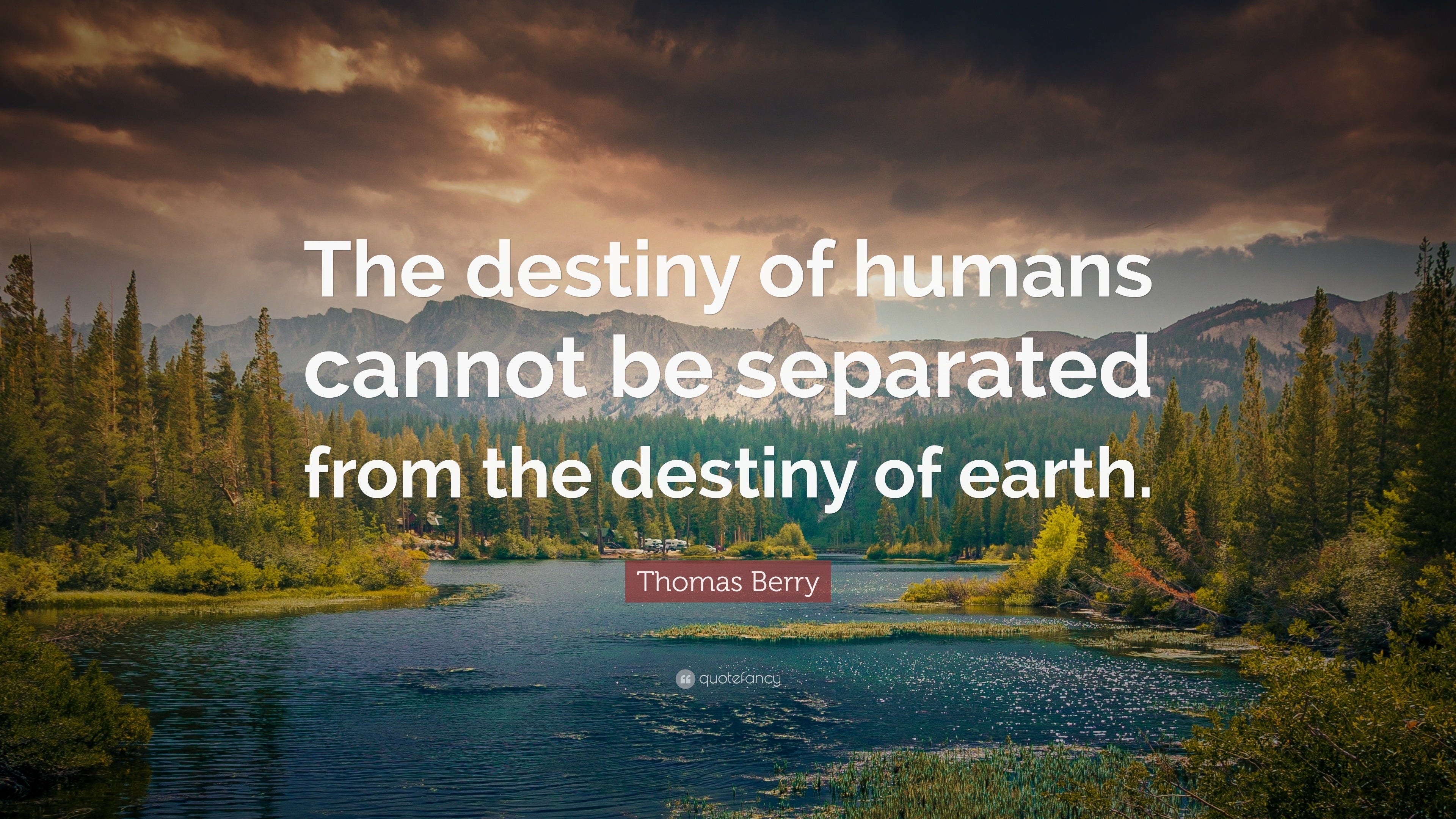
"We are not going to have a sustainable Earth
as long as we think of ourselves as separate from the Earth."
~Thomas Berry
Standing at the threshold as we approach 2026, we find ourselves suspended between endings and beginnings, caught in the gravitational pull of forces both ancient and contemporary. The crises that define our moment (ecological disruption, social fragmentation, technological upheaval) represent the natural convulsions of a world in transition. What feels like collapse reveals itself as the labor pains of a new epoch struggling to be born.
Across cultures separated by continents and millennia, humanity has developed sophisticated frameworks for understanding the rhythms of rise and fall, decay and renewal. From the cyclical cosmologies of Maya astronomers to the generational theories of modern sociologists, a consistent pattern emerges: periods of crisis serve as crucibles for transformation, forcing societies to either evolve or dissolve.
The question that haunts our present moment is whether we possess the wisdom to navigate this transition consciously, learning from both ancient teachings and contemporary insights to midwife a future worthy of our highest aspirations.
The Eternal Return: Patterns Across Time and Culture
The Chinese concept of the Mandate of Heaven reveals perhaps the most elegant formulation of civilizational cycles. This ancient framework understands history as a spiral, where dynasties rise through virtue and harmony with natural order, flourish in periods of balance, then decay when leaders lose sight of their cosmic responsibilities. The pattern repeats as an evolution through recurring themes; each cycle carrying forward the wisdom earned through previous transformations.
This wisdom finds unexpected resonance in Jared Diamond's material analysis in Guns, Germs, and Steel.1 When Diamond traces the fall of Rome or the Maya to resource depletion and environmental degradation, he echoes the Mandate's core insight: societies that violate natural limits invite their own dissolution. The Han Dynasty's collapse amid ecological stress mirrors the Roman Empire's overextension; both civilizations lost their mandate through internal disconnection from sustainable principles.
Yet the cyclical perspective transforms apparent despair into hope. The Mandate of Heaven suggests that crisis creates the conditions for renewal, that the very forces threatening our current order prepare the ground for unprecedented transformation. This ancient understanding provides the philosophical foundation for recognizing our current moment not as an end, but as a metamorphosis.
Generational Alchemy: The Strauss-Howe Vision
This ancient wisdom finds surprisingly specific expression in Strauss and Howe's theory of generational cycles.2 Their concept of the saeculum (roughly 80-year periods divided into four "turnings") maps remarkably well onto the broader patterns of cosmic time that have guided human understanding for millennia.
We are living through what they term a Fourth Turning, a crisis period that began around 2008 and may conclude by 2030. These Fourth Turnings represent profound spiritual reckonings that force societies to confront their foundational assumptions. The last such turning gave us World War II and the New Deal; transformations so complete they reshaped the global order for generations.
The genius of the Strauss-Howe model lies in its recognition that different generations carry distinct energetic signatures that combine to create historical moments. Today's crisis is being navigated by Millennials and Generation Z (the "Hero" and "Artist" archetypes whose natural inclination is toward collective action and adaptive innovation). Meanwhile, Generation X (the author’s generation) serves as the pragmatic bridge between the old world and the new, carrying forward the entrepreneurial spirit needed to build sustainable systems.
This generational alchemy suggests that our current chaos serves a purposeful design, orchestrated at levels beyond individual conscious awareness. The demographics of our moment seem specifically configured to facilitate the transition from an age of extraction to an age of regeneration; a pattern that echoes the cyclical wisdom embedded in both Chinese philosophy and Mayan cosmology.
Cosmic Rhythms: The Maya and the Long View
The ancient Maya understood the relationship between human affairs and cosmic cycles with extraordinary precision, offering perhaps the most sophisticated temporal framework ever developed. Their Long Count calendar marked December 21, 2012, not as an apocalypse but as completion: the end of a 5,125-year Great Cycle signaling transformation rather than termination.3
We now live in the 14th Baktun, a period the Maya associated with renewal and conscious evolution. This timing reflects what can only be understood as deep cosmic intelligence. The ecological crises that define the Anthropocene, the technological disruptions of artificial intelligence, and the generational shifts toward sustainability and social justice all emerge as humanity crosses this cosmic threshold.
Hindu and Buddhist cosmologies offer an even grander perspective, nested within the Mayan framework like Russian dolls of time. The current Kali Yuga, often translated as the "age of darkness," describes a period of materialism and spiritual confusion that mirrors our contemporary condition with startling accuracy.4 Yet these traditions also speak of mini-cycles within the greater rhythm: brief golden ages (mini-Satya Yugas) that can emerge even within periods of overall decline.
The convergence is striking: whether we consult Mayan calendars, Hindu yugas, or Strauss-Howe turnings, all point toward the 2020s and 2030s as a time of unprecedented transformation. This convergence represents more than coincidence… It suggests that human consciousness itself participates in the deeper rhythms of cosmic time, that our collective awakening follows patterns encoded in the very structure of reality.
Beyond the Anthropocene: Visions of What Comes Next
The term "Anthropocene" captures our current predicament with scientific precision: an epoch defined by humanity's unprecedented influence on Earth's systems, characterized by industrial extraction, biodiversity loss, and accelerating technological transformation.5 Yet this framing, while accurate, can trap us in narratives of inevitable decline.
Humanity's relationship with its planetary host has evolved from symbiotic partnership to extractive exploitation. Like a parasite that threatens its own survival by depleting its host, industrial civilization consumes resources faster than natural systems can regenerate them. The fantasy of colonizing other worlds while leaving our home in ruins represents the ultimate folly of a separation consciousness; mastery of interplanetary travel means nothing if we lack the wisdom to nurture the world that gave birth to us.
Two visionary concepts offer pathways beyond this impasse, each resonating with the cyclical wisdom we've explored. Glenn Albrecht's "Symbiocene" envisions a future where human systems are fully integrated with natural cycles, where our cities breathe like forests, our energy systems mimic photosynthesis, and our social organizations reflect the collaborative intelligence of ecosystems.6 This represents not a return to some imagined past, but an evolution toward unprecedented harmony.
Thomas Berry's "Ecozoic" era proposes a fundamental shift in consciousness where humanity recognizes itself as nature becoming conscious of itself.7 In this vision, our current crisis represents Earth's own awakening process, with human culture serving as the nervous system of planetary evolution. This perspective transforms our species from planetary destroyer to conscious participant in cosmic evolution.
Both concepts align remarkably with ancient prophecies of renewal. The Maya spoke of the 14th Baktun as a time when humanity would remember its cosmic purpose. Hindu texts describe mini-Satya Yugas arising within the Kali Yuga when enough individuals achieve enlightenment.
Reimagining with Reverence: The Sacred Return
The philosophical foundation for these transformative visions emerges through what I have explored elsewhere as a reintegration of the sacred through reverence for the natural world. This reintegration finds its most coherent expression in the convergence of ancient pantheistic wisdom with contemporary Gaia theory, offering a bridge between spiritual insight and scientific understanding that supports our transition toward Symbiocene and Ecozoic consciousness.8
Reimagining with Reverence

The pale blue dot. A miraculous world whirls like a dervish around a star, and everything we’ve ever been, this us, has resided on the wonder of a world longer than there was language to describe it. The magic of this marble might be lost on many, while millions are mired in humandom. The magnificent splendor and beauty of this blue sphere have a profo…
Pantheism, the understanding that the divine pervades all existence, provides the metaphysical foundation for recognizing Earth as a living, sacred being rather than dead matter to be exploited. From the ancient Stoics who saw divine reason (Logos) operating through natural law, to indigenous traditions that recognize spirit in every mountain, river, and tree, pantheistic consciousness dissolves the artificial separation between sacred and secular, human and nature, observer and observed.
This ancient wisdom finds unexpected validation in James Lovelock's Gaia hypothesis, which proposes that Earth functions as a self-regulating living system where biological, chemical, and physical processes interact to maintain conditions suitable for life. Gaia theory transforms our planet from passive resource to active participant in the evolutionary process, echoing the pantheistic insight that intelligence and purposefulness operate at every level of existence.
The convergence of pantheism and Gaia theory provides the philosophical groundwork for both Albrecht's Symbiocene and Berry's Ecozoic visions. If Earth is indeed a living, conscious system (as Gaia theory suggests) and if divine intelligence pervades all existence (as pantheism holds), then humanity's role transforms from conqueror to collaborator, from separate observer to conscious participant in planetary evolution.
This shift in consciousness represents more than philosophical speculation; it offers practical pathways for the "new story" Berry called for. When we recognize the sacred dimension of ecological relationships, environmental protection becomes a spiritual practice. When we understand ourselves as Earth becoming conscious of itself, technology becomes a tool for planetary awakening rather than planetary domination.
The cyclical frameworks we've explored (the Mandate of Heaven, generational turnings, cosmic cycles) all point toward this moment of reintegration. The crisis conditions of our time force us to rediscover what indigenous peoples never forgot: that human consciousness and planetary consciousness are not separate phenomena but different expressions of a unified evolutionary process.
This reimagining with reverence transforms our relationship with the natural world from extractive exploitation to symbiotic partnership, preparing the ground for the practical manifestation of Symbiocene and Ecozoic civilizations. It represents the spiritual dimension of the great turning, the recognition that our current crisis is ultimately a crisis of consciousness calling us to remember our cosmic purpose.
The Integral Moment: Balancing Ancient Wisdom and Emerging Possibilities
Philosopher Ken Wilber's integral theory to the Theory of Everything and AQAL, or all quadrants, all levels, provides a framework for understanding how these various perspectives might converge into coherent action.9 In his model, humanity is approaching what he calls "second-tier" consciousness: the ability to hold multiple viewpoints simultaneously without losing coherence. This capacity becomes essential as we navigate the complexity of our current moment.
The emergence of integral consciousness explains why ancient wisdom suddenly seems so relevant to contemporary challenges. We are developing the cognitive sophistication to appreciate cyclical time without abandoning linear progress, to honor indigenous knowledge without romanticizing the past, to embrace technology while maintaining spiritual depth. This integration represents the practical fulfillment of the Mandate of Heaven, earning cosmic authorization through serving the harmony of the whole.
This integration manifests practically across multiple domains. Regenerative agriculture combines traditional farming wisdom with cutting-edge soil science. Biomimicry translates natural intelligence into technological innovation. Social entrepreneurs create business models that serve both profit and purpose. These represent syntheses that transcend the either-or thinking that has dominated the modern era, embodying the integral consciousness that all our cyclical frameworks point toward.
2025: The Pivot Point
All these converging patterns suggest that 2025 represents a unique moment of possibility: a confluence of cycles that may not recur for generations. We stand at the intersection of multiple temporal rhythms: the Strauss-Howe Crisis turning toward resolution, the early phase of the Mayan 14th Baktun, the potential emergence from Kali Yuga darkness toward mini-Satya Yuga illumination, and the transition from Anthropocene extraction toward Symbiocene regeneration.
The signs of this transition are already visible across multiple domains. A generation of young leaders, shaped by environmental awareness and global connectivity, is entering positions of influence, the generational alchemy Strauss and Howe predicted. Artificial intelligence, properly guided, offers unprecedented tools for ecological restoration and social coordination. Indigenous wisdom is being recognized as sophisticated science rather than primitive superstition.
Yet this moment of possibility remains precisely that… Potential rather than predetermined outcome. The same forces that enable transformation could catalyze further fragmentation. The AI that could help orchestrate planetary healing might instead accelerate surveillance and inequality. The generational energy that could birth new forms of democracy might dissipate in political polarization. The cyclical patterns provide opportunity, not a guarantee.
The Disease of Disconnection
What unites all these challenges is what we might call the disease of disconnection, the illusion of separation that underlies our ecological crisis, social fragmentation, and spiritual emptiness. This disconnection manifests most clearly in what I call corporatism: the institutionalized form of parasitic extraction that treats the Earth as dead matter to be consumed and human beings as resources to be exploited.
Corporatism represents the antithesis of the Mandate of Heaven, operating through principles that violate natural limits and cosmic harmony. It embodies the darkest aspects of Kali Yuga consciousness: materialism divorced from spirit, competition divorced from collaboration, growth divorced from regeneration. Yet even this serves the larger pattern, creating the crisis conditions that force evolutionary transformation.
The Choice Before Us
What distinguishes our moment from previous transitions is the degree of conscious participation available to us. Our ancestors navigated change through intuition and limited information; we possess both ancient wisdom and scientific understanding, both local knowledge and global perspective. We can choose to participate consciously in the great turning rather than being carried along unconsciously by historical forces.
This participation requires what Thomas Berry called "the new story": a narrative that honors both our technological capabilities and our embeddedness in natural systems, both individual creativity and collective wisdom, both spiritual depth and practical effectiveness.10 Such a story emerges not from academic theory but from the grassroots of human experience, from countless individuals choosing to align their personal transformations with the larger evolutionary moment.
The Symbiocene and Ecozoic visions represent qualities of consciousness to embody rather than destinations to reach. They represent humanity's growing capacity to think like a forest, to organize like a mycelial network, to innovate like evolution itself. These are practical possibilities, ways of being that we can begin practicing immediately rather than distant utopias to achieve someday.
The ancient Mandate of Heaven teaches that cosmic authorization flows toward those who serve the harmony of the whole. As we face the challenges of our time (ecological disruption, social inequality, technological disruption), we have the opportunity to earn that mandate through service, through integration, through conscious participation in the great turning.
These ideas and others connect to the broader theme of moving from separation consciousness to integral consciousness.
Where We’re Headed
The next five years will determine whether we rise to meet this possibility or allow it to slip away into another cycle of crisis and collapse. The choice remains ours to make, both individually and collectively. The patterns of time itself seem to be conspiring in our favor, offering us a convergence of wisdom and opportunity that may come once in generations.
The question is no longer whether transformation is possible; the cyclical patterns assure us it is inevitable. The question is whether we possess the courage and wisdom to midwife it consciously into being, or whether we will stumble through it unconsciously, missing the opportunity for conscious evolution that this moment offers.
The ancient cycles suggest we do possess this capacity. The generational patterns indicate we're ready for this challenge. The cosmic timing couldn't be more auspicious for conscious transformation.
The great turning has begun. How it unfolds depends entirely on what we choose to do next.
:: Consider supporting article writers who never
require a paid subscription out of principle ::
Boost my Bandwidth
Footnotes and References
Diamond, Jared. Guns, Germs, and Steel: The Fates of Human Societies. W. W. Norton & Company, 1997. Diamond's analysis provides crucial empirical support for cyclical theories of civilizational rise and fall, demonstrating how environmental factors and resource constraints shape historical outcomes across cultures and time periods. For further exploration of civilizational patterns, see also Toynbee's Study of History.
Strauss, William, and Neil Howe. The Fourth Turning: An American Prophecy. Broadway Books, 1997. The Strauss-Howe generational theory offers a specifically American lens on cyclical patterns that nevertheless reveals universal principles about how generational archetypes interact to create historical moments. Their LifeCourse Associates website provides ongoing analysis of generational cycles.
The Mayan Long Count calendar represents perhaps the most sophisticated understanding of cyclical time ever developed, integrating astronomical observation with spiritual insight in ways that remain relevant to contemporary understanding of cosmic cycles. For a deeper understanding, see Maya Cosmogenesis 2012 by John Major Jenkins and NASA's explanation of Mayan astronomy.
The Hindu concept of Kali Yuga, described in texts like the Vishnu Purana, provides a framework for understanding our current age of materialism and spiritual confusion while maintaining hope for renewal through mini-cycles of awakening. For contemporary interpretation, see The Holy Science by Sri Yukteswar.
The term "Anthropocene" was popularized by Nobel laureate Paul Crutzen to describe the current geological epoch defined by human influence on Earth's systems. For a comprehensive understanding, see The Anthropocene Reviewed by John Green and the Anthropocene Working Group research.
Albrecht, Glenn. Earth Emotions: New Words for a New World. Cornell University Press, 2019. Albrecht's concept of the "Symbiocene" offers a vision of human-Earth integration that transcends both romantic primitivism and technological hubris. His Psychoterratica blog explores these concepts further.
Berry, Thomas. The Great Work: Our Way into the Future. Bell Tower, 1999. Berry's "Ecozoic" vision proposes a fundamental shift in human consciousness toward recognition of our role as Earth's emerging self-awareness. The Thomas Berry Foundation continues his work.
Lovelock, James. Gaia: A New Look at Life on Earth. Oxford University Press, 1979. Lovelock's Gaia hypothesis provides scientific validation for ancient pantheistic insights about Earth as a living system. For contemporary applications, see the Gaia Foundation and Deep Ecology Platform. For exploration of pantheistic philosophy, see Stanford Encyclopedia of Philosophy on Pantheism.
Wilber, Ken. A Theory of Everything: An Integral Vision for Business, Politics, Science, and Spirituality. Shambhala Publications, 2000. Wilber's integral theory provides a framework for synthesizing multiple perspectives without losing coherence. The Integral Life platform offers extensive resources on integral theory applications.
Berry's concept of "the new story" represents the necessity of creating meaning-making narratives that integrate scientific understanding with spiritual wisdom, providing the cultural foundation for ecological civilization. For related concepts, explore the Journey of the Universe project and The Story of Stuff for systems thinking approaches.